Postdoctoral Researcher Program
The Department of Astronomy and the Center for Cosmology and AstroParticle Physics (CCAPP) together host a vibrant postdoc program, spanning research areas from exoplanets to the early universe.
There are typically about 20 postdocs in residence, with Astronomy postdoc offices in McPherson Laboratory and most CCAPP postdoc offices in the Physics Research Building. Daily and weekly events are hosted in both buildings, so that the postdocs form a close-knit, cross-disciplinary community with a high level of daily interaction with faculty, students, and our technical and research staff members.
Mentoring and Career Development
OSU Astronomy and CCAPP are committed to the mentoring and professional development of postdoctoral researchers.
Most postdocs have one or more primary faculty advisors who support their research program and professional development. We also organize regular (3 times/year) check-ins for each postdoc with a faculty member who is not their primary host, so that they get advice and feedback from a broad range of perspectives.
Postdocs are fully integrated into the rich intellectual environment of OSU Astronomy and CCAPP, with regular events that include the daily Astro Coffee discussion and the weekly CCAPP seminar (organized by postdocs) and Astronomy Colloquium and the informal weekly Astro Tea. Most research groups also host one or more weekly meetings.
These regular events provide constant opportunities for interaction and to present work and discuss papers or research ideas at many different levels.
In addition, the annual summer career development workshop, the Invitations to Industry talk series, and the Erdos Institute provide excellent resources for postdocs and a broader audience to learn and explore opportunities outside astronomy. Postdocs are also encouraged to mentor undergraduate research if they wish to do so and to engage in the astronomy department’s extensive public outreach program.
Resources and Facilities
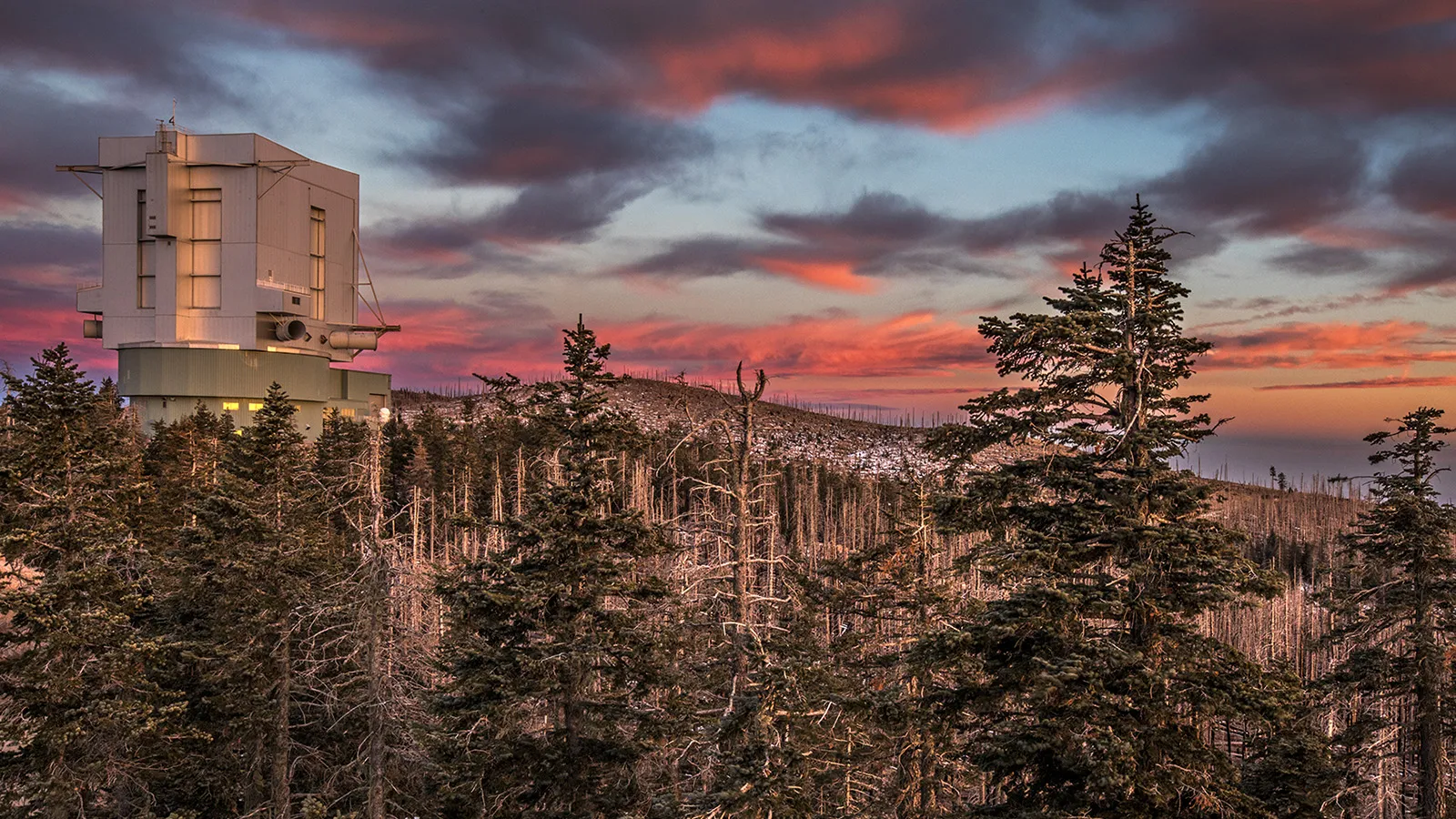
Postdoctoral researchers in Astronomy have access to the department’s observing resources and facilities. These include access to OSU’s 1/6 share of time in the Large Binocular Telescope (LBT) and 1/4 share of the MDM Observatory. Postdocs can be PIs on observing proposals (solicited twice per calendar year), and they regularly receive time on both facilities. Additionally, postdocs can request membership in large survey programs including SDSS, ASAS-SN, DESI, and others.
Postdocs can also request PI status to lead funding proposals, when appropriate. With support from faculty members, Astronomy postdocs have been PIs for successful federal funding proposals, including competitive NASA XRP, Fermi, and TESS funding opportunities.
Computational facilities include a departmental cluster, and access to the College of Arts & Sciences Unity Cluster, and the Ohio Supercomputing Center.
The department has an active instrumentation group in its Imaging Sciences Laboratory (ISL) and strong ties to the Ohio State Physics Department through the Center for Cosmology and AstroParticle Physics (CCAPP).
Postdoctoral Social Community
Across Astronomy and CCAPP, there is a large and active postdoctoral community representing a diverse range of nationalities. This group is highly social, with regular informal gatherings such as daily lunches, Friday evening drinks, potlucks, holiday events (e.g. Friendsgiving and Super Bowl watch parties), etc. These events are open to all and are typically organized through shared forums such as the CCAPP slack channel.
Postdoctoral Fellowships & Research Opportunities
OSU serves as a host institution for independent, externally-funded postdoctoral fellowships. These include national postdoctoral fellowships like the NSF Fellowship, NASA’s Hubble, Einstein, and Sagan Fellowships, the Brinson Fellowship, 51 Peg b Fellowship, as well as international postdoctoral fellowships like those from the Natural Sciences and Engineering Research Council of Canada (NSERC), the Japan Society for the Promotion of Science (JSPS), and others.
OSU Astronomy and CCAPP also support postdoctoral researchers through independent fellowships and grant-specific research opportunities.
Prospective applicants and researchers should email the faculty most closely aligned with their research program.
Funded Fellowship Opportunities
OSU has several annual and semi-regular opportunities for supporting the funding of postdoctoral researchers.
Ohio State Funded Fellowships
The President’s Postdoctoral Scholars Program (PPSP) supports the scholarly efforts and training of terminal degree holders (MFA, PhD, and others) who wish to pursue careers in research and creative inquiry. This fellowship opportunity includes up to two years of salary support and full benefits provided by the Office of the President and the scholar’s faculty mentor, department, and/or sponsor college. PPSP Scholars receive dedicated funds each year to support research, creative expression, and professional development-related expenses and also relocation support in the first year to assist with moving to Columbus, OH. PPSP candidates must be nominated by OSU faculty.
CCAPP Postdoctoral Fellows
Jointly offered by the OSU Department of Astronomy and Department of Physics, these competitive fellowships support independent research across cosmology, astroparticle physics, and astrophysics. Current CCAPP research areas include dark energy, large-scale structure, cosmic microwave background, gravitational lensing, dark matter, galaxy formation and evolution, galactic dynamics and substructure, cosmic rays, gamma rays, neutrinos, nucleosynthesis, stellar physics, supernovae, gamma-ray bursts, and active galactic nuclei. See the listing on the CCAPP website for more details.
Buckeye Prize Fellowship
The Buckeye Prize Fellowship supports independent research in any major area of astronomy, including theoretical, observational, and instrumentation fields. This fellowship is not offered every year; it is advertised in the AAS Job Register in years when it is available.
Research program specific positions
Faculty within the Department periodically advertise postdoctoral researcher positions related to specific funded research programs. Such positions are typically advertised through the AAS Job Register or other similar platforms.