LBT measures primordial helium with unprecedented precision
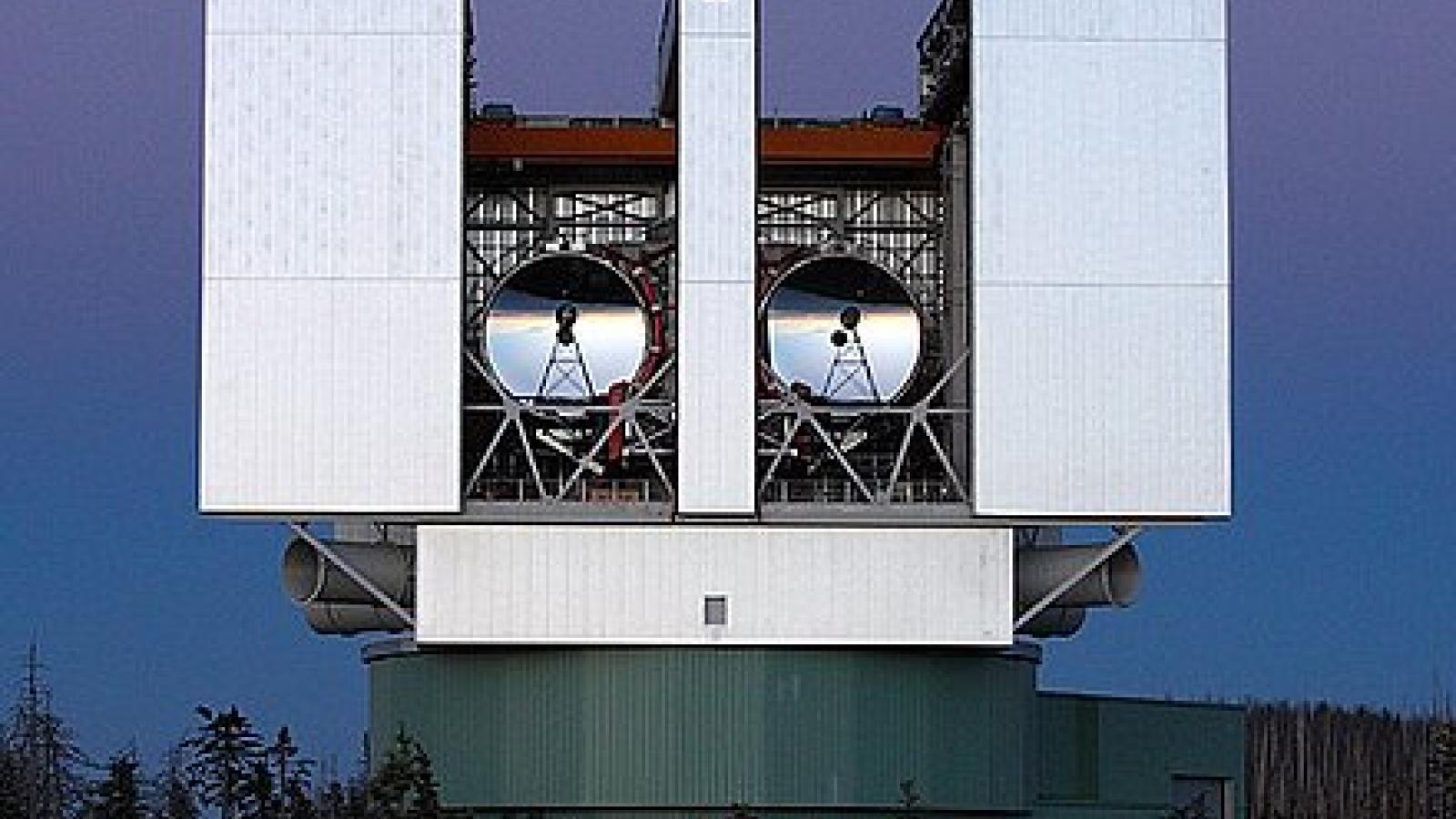
New observations regarding the composition of distant galaxies reveal insights into the earliest phases of the universe that confirm decades of scientific understanding of the elements and particles produced by the Big Bang, according to a new study.
Researchers used data from The Large Binocular Telescope (LBT) to measure the amount of helium — the second-most common element in the cosmos and a vital ingredient for the formation of life — in metal-poor nebulae, clouds of gas and dust in space where stars are born. Their findings strengthen long-held theories about how ancient elements, such as carbon and nitrogen, may have been dispersed in the period following the Big Bang.
The results, part of a project sponsored by the NSF with collaborators at OSU, University of Minnesota, and Gonzaga University, were published today in as a special Focus Issue in the Astrophysical Journal.